
Support that understands neurodivergence
Celebrating Neurodiversity.
Supporting Every Journey
Families often come to The Neurodiverse Clinic after years of trying to make other approaches work. They have done behaviour programs. They have done OT. They have done speech. They have followed plans, charts, reward systems, visual schedules, and social skills groups. And still, things escalate. School breaks down. Home feels like a battleground. The child refuses therapy. The adult shuts down. PDA is labelled as “non-compliance”. Burnout is misunderstood. The nervous system is in constant threat. By the time people find us, it often feels like crisis.
We exist because too many autistic and neurodivergent people are being supported through frameworks that were not designed for them.
We do not try to make autistic people fit the world
We work from a deep understanding of autism, neurodivergence, neuroscience, and development.
That means we look at:
-
nervous system threat responses
-
demand sensitivity and PDA profiles
-
interoception and sensory processing
-
developmental learning pathways
-
skill acquisition through safety and autonomy
-
the difference between behaviour as communication and behaviour as “defiance”
We do not see refusal as opposition.
We do not see shutdown as avoidance.
We do not see distress as manipulation.
We ask what the brain and body are responding to, and we build from there.
Why families come to us
Families often come when:
-
their child no longer engages with OT, speech, or previous behaviour support
-
standard reward systems have made things worse
-
school is pushing compliance over regulation
-
PDA has been misunderstood or dismissed
-
reports focus on deficits rather than nervous system needs
-
everything feels like crisis management
They come because they want someone who actually understands autism beyond surface traits.
What sets us apart
We are not a generic behaviour service.
We integrate:
-
contemporary autism research
-
neuroscience and nervous system models
-
developmental and learning theory
-
functional assessment that stands up to NDIS scrutiny
-
practical coaching for parents and support teams
-
implementation in the real environments where stress is occurring
We understand that you cannot build skills in a brain that feels unsafe.
We understand that demand-sensitive profiles require collaboration, autonomy, and careful language.
We understand that “refusal” often reflects overload, loss of control, or cumulative stress.
And we know how to adjust supports accordingly.
What we are actually trying to do
We are not trying to produce compliance.
We are trying to:
-
reduce nervous system threat
-
increase felt safety
-
protect identity and autonomy
-
build functional skills in ways that respect neurodivergent learning styles
-
support families to feel confident, not blamed
We are small on purpose. That allows us to work deeply, not superficially. We coach the adults around the child or person so strategies are consistent and sustainable. We adjust when things are not working. We look for patterns, not quick fixes.
If this sounds like you
If you are exhausted from trying to make systems work for your autistic child or family member.
If you have felt blamed, dismissed, or told you are not implementing things “properly”.
If your child has disengaged from therapy because it felt like pressure.
You are not failing. You may simply have been given the wrong framework.
We are here for families who want support that actually understands autism, PDA profiles, nervous system regulation, and developmental learning, and who want strategies that work in real life, not just in reports.

We specialise in autism specific Specialist Behaviour Support for autistic and neurodivergent individuals. Our plans go beyond managing behaviours of concern by starting with the nervous system and the unique neurology of autism. We consider how hyper and hypo sensitivities, interoception, and central nervous system stress responses shape regulation, communication, safety and behaviour in everyday settings. We then use National Autism Center established interventions to build practical skills, reduce distress and support alternatives to restrictive practices. The result is neuroaffirming, evidence based support that improves safety, participation and quality of life.

Our Key Worker Model provides coordinated, relationship based support for children and families during the early years. One consistent practitioner helps identify the child’s developmental profile and regulation needs, then brings the team together around assessments and evidence based interventions that build real skills. We prioritise intensive early intervention to bridge developmental gaps before primary school, rather than relying on isolated, once a week therapy sessions. Where needed, we help families pursue diagnosis and NDIS access by coordinating allied health evidence and preparing clear information to take to the paediatrician, so families do not fall through the gaps.

We specialise in Functional Capacity Assessments for autistic and neurodivergent individuals. Our reports go beyond a standard checklist. We translate day to day functioning, regulation needs, sensory and communication differences, and environmental barriers into clear evidence that supports the right NDIS funding and practical supports. We do not just deliver a report and leave families to interpret it alone. We take the time to explain what the findings mean in plain, meaningful language, so recommendations are understood, relevant and genuinely usable in everyday life.

Our Support Coordination is grounded in a strong understanding of disability legislation, NDIS criteria and the realities families face on the ground. We do more than link you with providers. We help you understand your plan, your rights and what reasonable and necessary supports look like for autistic and neurodivergent individuals. We work alongside you to build a team that aligns with your goals, monitor progress and address gaps or risks early. The focus is on clarity, accountability and making sure your supports genuinely meet your needs, not just what is easiest to access.

We provide targeted Skill Development based on a clear understanding of developmental stage, learning profile and functional needs. We assess current skills, then create practical plans that build regulation, communication, independence and participation. Our therapists and therapy assistants are specifically trained in autism, neurodivergence and developmental differences, so families can feel confident that strategies are implemented safely and consistently. We support skill generalisation across home, community and clinic settings, helping individuals succeed through major transitions like starting school, changing schools, beginning work or moving towards living more independently.
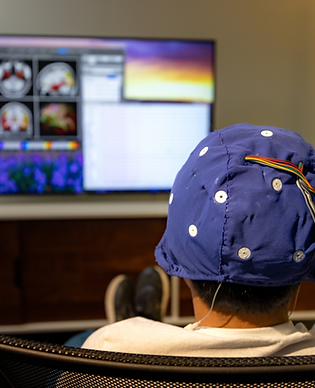
Coming Soon
Neurofeedback
We are expanding our services to include neurofeedback and other brain based modulation supports, including transcranial direct current stimulation, known as tDCS. Neurofeedback uses EEG technology to measure brain activity and support the development of more regulated and flexible neural patterns over time. tDCS is a non invasive form of brain stimulation that applies a low level electrical current to targeted areas of the brain to support neuroplasticity and learning.